
New HIPAA Cybersecurity Rules Proposed: How CoreRecon Can Help Your Healthcare Facility Stay Compliant
The U.S. Department of Health and Human Services (HHS) Office for Civil Rights (OCR) has introduced a set of proposed cybersecurity regulations aimed at enhancing the protection of patients’ sensitive data against escalating cyber threats. These proposed changes seek to amend the Health Insurance Portability and Accountability Act (HIPAA) of 1996 as part of a broader initiative to bolster the cybersecurity of critical infrastructure.
Key Highlights of the Proposed Regulations
The updated rules are designed to strengthen safeguards for electronic protected health information (ePHI) by addressing growing cybersecurity threats to the healthcare sector. Notable requirements include:
- 72-Hour Data Restoration: Organizations must establish procedures to restore critical electronic systems and data within 72 hours of disruption.
- Annual Compliance Audits: Healthcare entities must conduct a compliance audit at least once every 12 months.
- Enhanced Security Measures: Requirements include encryption of ePHI at rest and in transit, multi-factor authentication, and the deployment of anti-malware protection.
- Regular Risk Assessments: Entities must review their technology asset inventory and network maps, identify vulnerabilities, and implement robust backup and recovery processes.
- Network Segmentation and Technical Controls: Healthcare organizations must implement network segmentation, perform vulnerability scans at least every six months, and conduct annual penetration testing.
Rising Threats to the Healthcare Sector
Healthcare organizations remain prime targets for cybercriminals due to the sensitive nature of patient data and the financial incentives tied to ransomware attacks. A recent report by Sophos revealed:
- 67% of healthcare entities were hit by ransomware in 2024, a significant increase from 34% in 2021.
- 53% of affected organizations paid ransoms, with median payments reaching $1.5 million.
- Recovery times are worsening, with only 22% of victims recovering in a week or less, down from 54% in 2022.
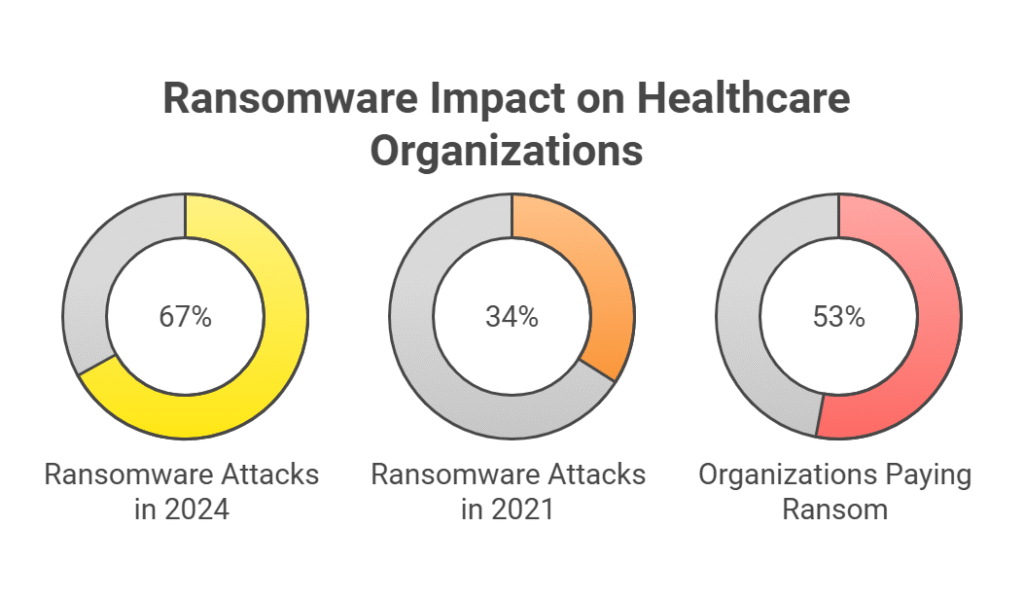
The ongoing surge in ransomware attacks has disrupted patient care, delayed access to medical records, and exposed significant vulnerabilities in healthcare IT systems.
How CoreRecon Can Support Your HIPAA Compliance Journey
At CoreRecon, we understand the critical importance of safeguarding healthcare organizations from cyber threats. As Texas’ only 24/7 cybersecurity and Premier IT support provider, we offer comprehensive solutions to ensure your facility stays HIPAA compliant:
- Real-Time Threat Monitoring: Our Security Operations Center (SOC) operates around the clock, monitoring and mitigating threats before they can impact your organization.
- Customizable IT Services: From vulnerability scanning and penetration testing to asset inventory management and network segmentation, we provide tailored IT services to meet the unique needs of healthcare facilities.
- Proactive Compliance Support: CoreRecon assists with compliance audits, risk assessments, and implementing best practices for ePHI encryption, data recovery, and system security.
- Rapid Response and Recovery: Our team ensures minimal downtime with efficient data restoration processes, keeping your systems operational even in the face of an attack.
Cybersecurity in healthcare is no longer optional—it’s a necessity. Let CoreRecon protect your facility, your data, and your patients. Contact us today to learn more about how we can help you achieve HIPAA compliance and safeguard your operations.